Dance Fitness for the Over-50s: What Most Classes Get Wrong | Groove Fitness Leuven
The fitness industry treats over-50s like they're fragile. But mature people love dancing — and the research backs it up. Here's what most dance fitness classes get wrong, and what Groove Fitness does differently.
DANCE FITNESS FOR OVER 50SFITNESS FOR OVER 50S LEUVENDANCE FITNESS FOR OLDER ADULTSFUN FITNESS CLASSES OVER 50
Richard Ventham
3/18/20266 min read
Google "fitness for seniors" and tell me what you see.
I'll save you the trouble. It's a parade of stock photos featuring people in their seventies doing very gentle stretching, a bit of yoga, some tai chi, maybe a careful stroll through a park. Occasionally someone's on a stationary bike, pedalling at a pace that suggests the bike might actually be winning.
These are all perfectly valid activities. I do yoga at least twice a week myself — it's genuinely beneficial for both my body and my mind, and I wouldn't be able to dance as much as I do without those sessions. But is yoga fun? I'll be honest: no. Walking is pleasant, especially when the weather cooperates. Cycling is nice. But fun? Not really.
And here's the question nobody in the fitness industry seems to be asking: what happens when you hit 50 and you still want a dance workout that actually makes you smile?
The fitness industry has a 50+ imagination problem
Somewhere around your fiftieth birthday, the fitness world quietly decides you're done with anything joyful. The marketing shifts. The imagery changes. Suddenly it's all gentle movements, soothing music, and the unspoken assumption that you'd better be careful with those knees.
The options presented to you narrow down to yoga, pilates, walking groups, and maybe — if you're feeling adventurous — aqua-aerobics. All of which are fine. But they share one thing in common: none of them are designed to make you leave with a massive grin on your face.
Meanwhile, the dance fitness world is busy marketing itself exclusively at twenty and thirty-somethings. Fast-paced choreography, EDM playlists, neon lighting. The message is clear: this is for young, fit bodies. If you're over 50, this isn't for you.
Except — and this is the bit that frustrates me — mature people absolutely love to dance.
The evidence is right there (and it's packed)
I go regularly to the Foyer Matinée at 30CC in Leuven. I was there on 8 March, like I am most months. It's a social dance afternoon — once a month, proper dance floor, resident DJ Bobby Ewing and regular guest DJs. And every single time, the place is packed. Not with twenty-somethings. With people in their fifties, sixties, seventies, and beyond. Dancing. Smiling. Having a brilliant time.
These aren't people who've given up on movement. These are people who love a good dance workout — they just don't see themselves reflected in the fitness industry's idea of what "exercise for older adults" should look like.
And the research agrees with them. A 2025 systematic review published in Frontiers in Sports and Active Living looked at how dance affects wellbeing in older adults across physical, emotional, cognitive, and social dimensions. The findings were clear: dance supports active ageing by improving physical performance, boosting mood and self-esteem, strengthening social connections, and even helping to counteract loneliness. Short-term dance programmes improved emotional and social wellbeing, while longer-term programmes showed benefits for cognitive and physical health too.
That's not just "gentle exercise is good for you." That's dancing specifically — the combination of music, rhythm, movement, and doing it with other people — delivering measurable benefits across nearly every dimension of health.
So why is the fitness industry still offering over-50s nothing but stretching and slow walks?
What most dance fitness classes get wrong
Here's the problem. Even when dance fitness classes exist for older adults, they tend to make one of three mistakes:
They water it down too much. The assumption is that if you're over 50, you need everything slowed down, simplified, made "safe." The result is a class that feels patronising rather than energising. You're capable of more than gentle arm raises to soft piano music.
They use music nobody actually loves. A lot of fitness classes aimed at older adults use generic background music or watered-down covers. But the whole point of dance is that the music moves you. If you grew up with Chic, Earth Wind & Fire, Donna Summer, and Kool & the Gang, hearing those original tracks is what makes your body want to move. A royalty-free "upbeat instrumental" doesn't do the same thing.
They focus on fitness outcomes instead of fun. "Improve your balance!" "Reduce your fall risk!" "Maintain bone density!" All true benefits of dancing — but if that's the sales pitch, it sounds like a medical intervention, not something you'd actually look forward to. People don't go to the Foyer Matinée because they're worried about their bone density. They go because it's a fantastic afternoon out.
What Groove Fitness does differently
Groove Fitness isn't a class for older adults. It's a class for anyone who loves classic disco and soul music — and it turns out that skews towards a more mature crowd, because people in their twenties weren't alive when "September" came out.
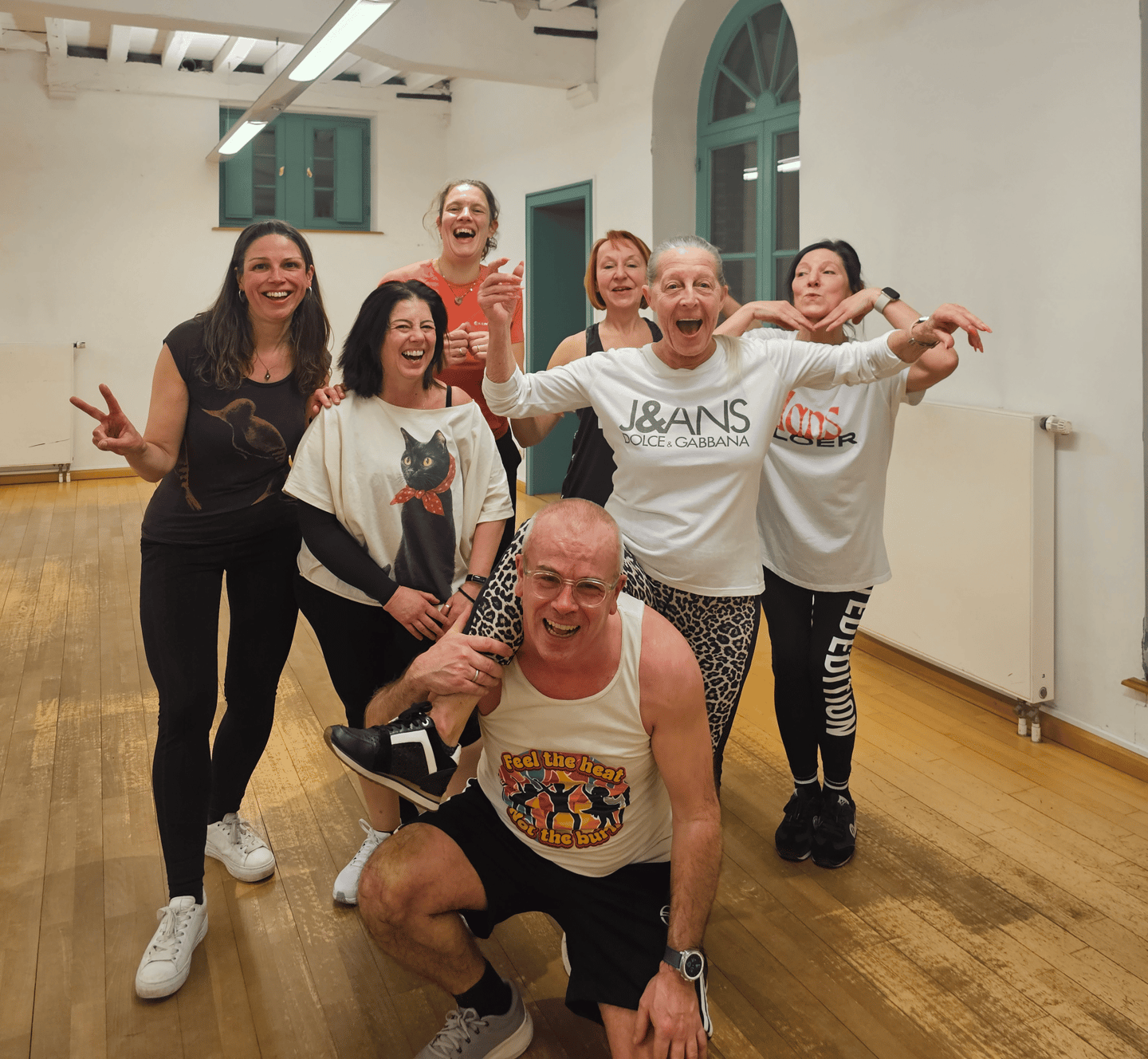
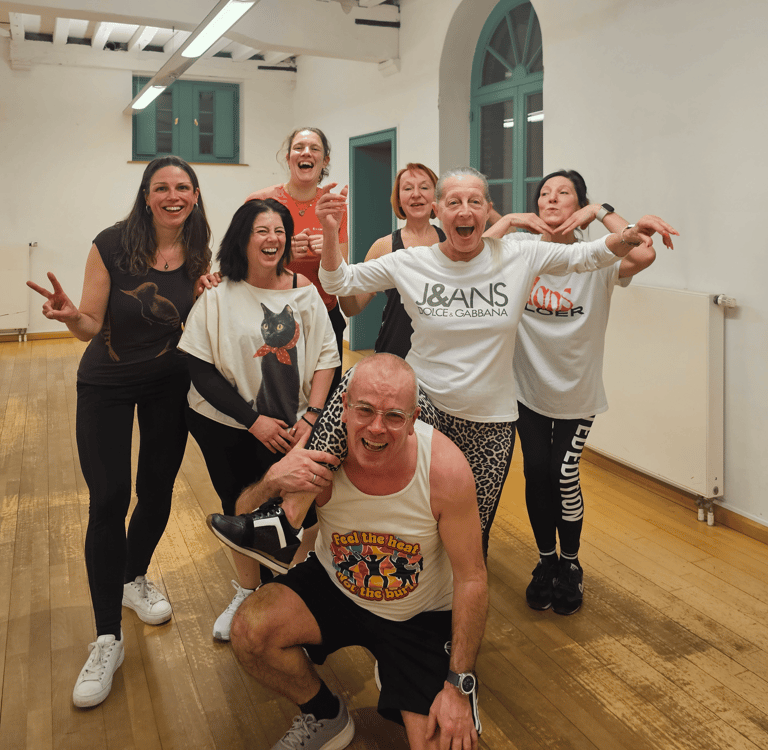
I have people in their twenties in class. I have people in their sixties. The music is the common thread, not the age. Nobody is being spoken down to, nobody is being told to "take it easy." The sequences are guidelines, not rules — if you want to go full energy, brilliant. If you want to take it easier, that's equally fine. Your body, your choice, your fun.
There are a few things that make this work for people across the age range:
The music is all original 70s and 80s disco and soul. Not remixes, not sped-up versions, not covers. The actual records. If you know these songs, your body already knows what to do — the rhythm does half the work.
Low-impact options are always available. Every sequence can be adapted. There's no moment where you have to jump, and no one is checking whether you're doing the "right" version. The emphasis is on moving to the music, not on impact level.
The vibe is relaxed and judgement-free. I'm not a professional dancer — I left a 28-year pharmaceutical career to do this because I love disco and wanted to share that. I make mistakes in class too. The whole atmosphere is built around enjoyment, not performance.
It's genuinely social. People chat before class, they laugh during it, they hang around afterwards. That social element — which the research specifically highlights as one of the key benefits of dance for older adults — happens naturally because the environment is warm rather than intense.
You don't have to settle for gentle stretching
If you're over 50 and you've been looking at fitness options thinking "is this really all there is?" — I get it. The industry hasn't caught up with the reality that mature people want a dance workout they actually look forward to, not just another way to "stay active."
Dancing is one of the best things you can do for your body, your brain, and your mood. The science is clear on that. But more importantly, it's one of the few forms of exercise where the main side effect is leaving with a smile on your face.
If classic disco and soul is your kind of music, come try a free class and see if Groove is your thing. No commitment, no fitness test at the door. Just the good stuff.
Richard, Chief Groove Officer 🪩
Frequently Asked Questions
Is Groove Fitness suitable for people over 50?
Yes — and not in a "modified for older adults" way. Groove Fitness is built around classic disco and soul music, which naturally appeals to a more mature audience. Low-impact options are always available, sequences are adaptable, and the focus is on fun rather than intensity. Most of our regulars are in the 40-65 range.
Is dance fitness good exercise for older adults?
Research consistently shows that dance is one of the most effective forms of physical activity for people over 50. A 2025 systematic review found benefits across physical, emotional, cognitive, and social dimensions of wellbeing — from improved strength and balance to reduced feelings of loneliness.
Do I need dance experience to try Groove Fitness?
None at all. The sequences are simple, repetitive, and designed to be easy to follow. Half the people in class are making it up as they go — including me. If you can tap your foot to a beat, you've got everything you need.
What kind of music does Groove Fitness use?
Original 70s and 80s disco and soul — Chic, Earth Wind & Fire, Donna Summer, Kool & the Gang, Chaka Khan, Barry White. No remixes, no covers, no generic fitness playlists. The original records, the way they were meant to sound.
How does Groove Fitness compare to other fitness classes for over-50s?
Most fitness options for the 50+ age group focus on low-intensity activities like yoga, pilates, or walking groups. Groove Fitness is more energetic and music-driven, but still accessible — you control your own intensity level. Here's a full comparison of dance fitness options in Leuven.
Can I try a class before committing?
Your first class is free. No subscription required, no pressure, no catch. Come see if it's your thing.